The Beautiful Scars: How Britain's Repair Artists Are Making Broken Things Brilliant Again
In a cramped workshop above a vintage shop in Brighton, ceramicist Anna Blackwood carefully applies gold lacquer to the crack running through a much-loved serving bowl. This isn't a repair job trying to hide damage — it's an art form that celebrates it. When Anna's finished, that crack will gleam like a river of precious metal, transforming a broken piece into something more beautiful than it ever was whole.
 Photo: Anna Blackwood, via www.gethucinema.com
Welcome to Britain's visible mending movement, where repair has become rebellion, and broken things are finally getting the respect they deserve.
When Fixing Becomes Art
The Japanese have a word — kintsugi — for the art of repairing pottery with gold, celebrating damage rather than concealing it. But Britain's repair artists are writing their own chapters in this story, applying the philosophy of beautiful mending to everything from beloved jumpers to treasured crockery.
"We've been taught that broken equals worthless," explains textile artist Rosie Chen, whose London studio specialises in visible mending techniques. "But actually, the things that have lived, that have stories written in their wear patterns and gentle damage — those are the pieces with the most character."
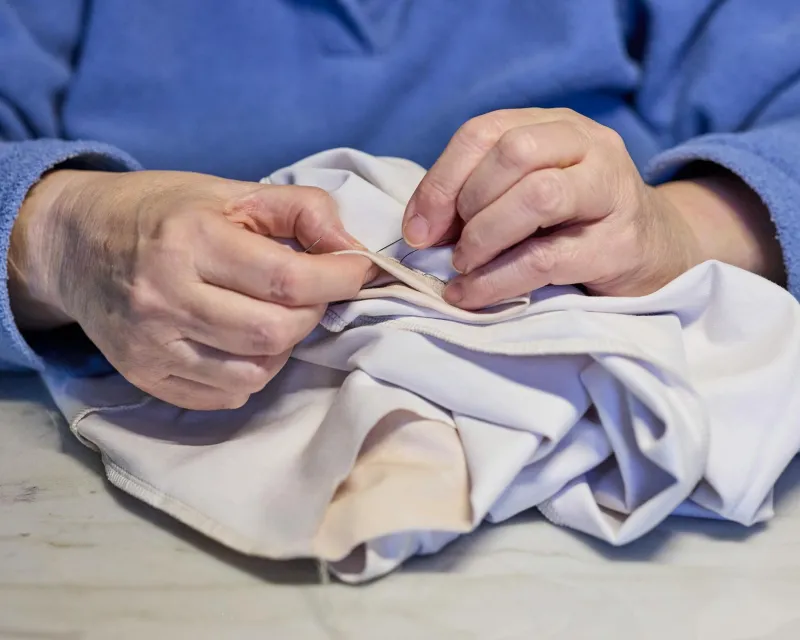
Rosie's Instagram feed reads like a love letter to imperfection: jeans with torn knees transformed by intricate embroidered flowers, cardigans with moth holes turned into constellations of tiny stars, and jumpers with pulled threads rewoven into deliberate patterns that catch the light.
The Threads That Bind Us
Visible mending isn't just about making things last longer — though it certainly does that. It's about changing our relationship with the objects we love, celebrating their journey through life rather than discarding them at the first sign of wear.
Take the work of Manchester-based textile artist David Hartwell, who runs workshops teaching people to see damage as opportunity. His students arrive clutching garments they were ready to throw away and leave with pieces that look like they could hang in galleries.
"I had a woman bring in her late husband's cardigan," David recalls. "It had holes from years of wear, and she couldn't bear to throw it away but couldn't bear to look at it either. We spent an afternoon turning those holes into windows filled with embroidered memories — the garden they tended together, the books he loved. She wears it now with pride."
This is the emotional heart of visible mending: it's not just about fixing things, it's about honouring their stories.
Beyond Needles and Thread
While textile repair might be the most visible face of this movement, Britain's repair artists are applying similar philosophies to everything that breaks, chips, or wears down.
In her Gloucestershire workshop, furniture restorer Sarah Pemberton specialises in what she calls "honest repairs" — fixes that acknowledge damage rather than hiding it. A table leg broken and rejoined becomes a feature, reinforced with contrasting wood that creates beautiful geometric patterns. Chair backs split with age are mended with visible stitching in leather or rope that becomes part of the design.
"Why pretend it never happened?" Sarah asks, running her hand along a table where the repair work creates a striking stripe across the grain. "This table has lived. It's hosted family dinners, homework sessions, probably a few arguments. That break is part of its story, and the repair is part of its beauty."
The Community of the Carefully Broken
Perhaps the most remarkable aspect of Britain's visible mending movement is how it's bringing people together. Online communities share photos of their repair work like proud parents, workshops fill with people eager to learn new techniques, and repair cafes pop up in community centres across the country.
The monthly repair cafe at a community centre in Edinburgh has become something of a local institution. Volunteers with skills in everything from electronics to embroidery help locals fix everything from torn clothing to broken toasters. But it's the visible mending station that draws the longest queues.
"People arrive feeling embarrassed about their damaged things," explains volunteer coordinator Margaret Stewart. "They leave feeling proud. There's something powerful about learning to see beauty in imperfection, about choosing to celebrate wear rather than hide it."
A Philosophy for Our Times
This celebration of repair speaks to something deeper than just sustainability — though it certainly has environmental benefits. In a world that constantly pushes us towards the new, the perfect, the unmarked, visible mending offers a different way of being.
It suggests that the most interesting stories are written in scars, that perfection is overrated, and that the things worth keeping are often the ones that show their age. It's a philosophy that extends far beyond objects to how we think about ourselves, our relationships, and our place in a world obsessed with youth and flawlessness.
"When I teach people to mend visibly," says Rosie from her London studio, "I'm really teaching them to see differently. To value history over novelty, character over perfection, stories over surfaces. Once you start seeing damage as decoration, everything changes."
The Future of Beautiful Imperfection
As Britain's visible mending movement grows, it's changing not just how we fix things, but how we make them in the first place. Designers are beginning to consider how their pieces might age, how they might be repaired, what kinds of beautiful damage they might acquire over time.
Some are even building planned obsolescence into their work — not the cynical kind that forces replacement, but the thoughtful kind that anticipates change, that designs for a lifetime of gentle transformation and visible repair.
In Anna's Brighton workshop, surrounded by pottery pieces gleaming with golden scars, she puts it simply: "The most beautiful things aren't the ones that never break. They're the ones that break beautifully, and get put back together with love."
As we navigate a world that often feels broken itself, perhaps there's wisdom in learning from these repair artists. Maybe the answer isn't to throw things away when they crack, but to learn to see the cracks as places where the light gets in — and to make those places shine.