The Shed That Changed Everything
When potter Alison Grant first eyed the dilapidated greenhouse at the bottom of her Cotswold garden, her husband thought she'd lost her mind. "It was falling down, full of spiders, and leaked like a sieve," she laughs, gesturing around what is now one of the most coveted ceramic studios in the region. "But I could see something he couldn't – I could see my future."
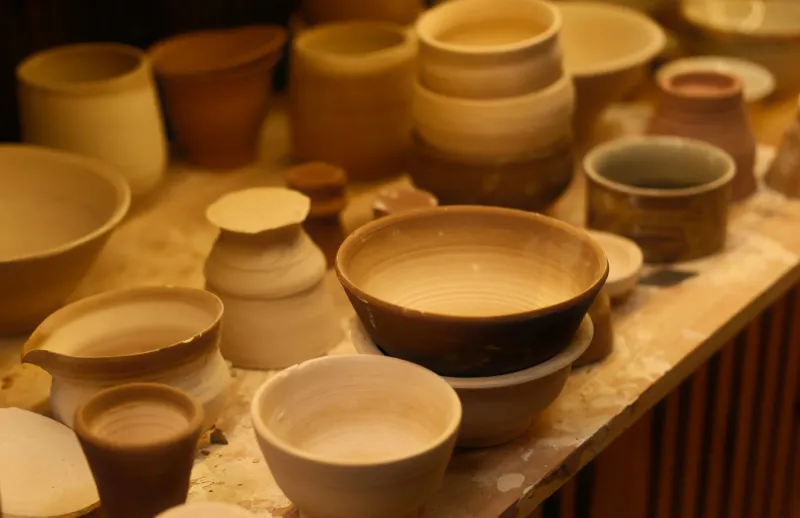
Three years later, that ramshackle greenhouse has been transformed into a light-filled studio where Alison's distinctive earthenware pieces come to life. More importantly, it's become the headquarters of what she calls her "garden revolution" – a complete reimagining of how and where creative work happens.
"The moment I stepped into my own space, everything changed," she explains, her hands never pausing as she shapes a bowl on the wheel. "Not just my pottery, but my entire relationship with making. Out here, I'm not a mum who happens to make pots in her spare time. I'm a potter who happens to be a mum."
Alison's story is being repeated in gardens across Britain, where a new generation of makers is discovering that the path to creative independence might just lead through the back door.
The Alchemy of Creative Solitude
There's something uniquely British about the garden studio phenomenon. Perhaps it's our love affair with sheds, our need for privacy, or simply our talent for making the most of small spaces. Whatever the reason, from the Highlands to the Home Counties, creative souls are claiming their corner of the garden and transforming it into something magical.
In Bath, textile designer Marcus Webb works from what was once his children's playhouse. "It's eight feet by ten feet," he grins, somehow managing not to knock over any of the looms that fill every available inch. "My friends think I'm mad, but there's something about having just enough space and not an inch more that focuses the mind wonderfully."
The constraint isn't a limitation – it's a liberation. Without room for excess, every tool, every material, every surface has to earn its place. The result is studios that feel more like precision instruments than storage spaces, where everything has a purpose and nothing is wasted.
The View That Inspires
What sets garden studios apart from spare rooms or kitchen tables isn't just the independence – it's the connection to the natural world. Every maker speaks of how the changing seasons, the light through the windows, the sound of rain on the roof becomes part of their creative process.
"I plan my glazing schedule around the weather," admits ceramicist David Chen, whose studio looks out over his carefully tended vegetable garden in Derbyshire. "Cloudy days for detail work, bright mornings for colour mixing. The garden tells me what kind of day it's going to be before I even pick up a brush."
For jeweller Emma Hartley, whose studio is a converted shepherd's hut in the Yorkshire Dales, the view is everything. "I'm surrounded by dry stone walls, ancient field patterns, the bones of the landscape. Every piece I make carries a little of that geometry, that sense of things built to last."
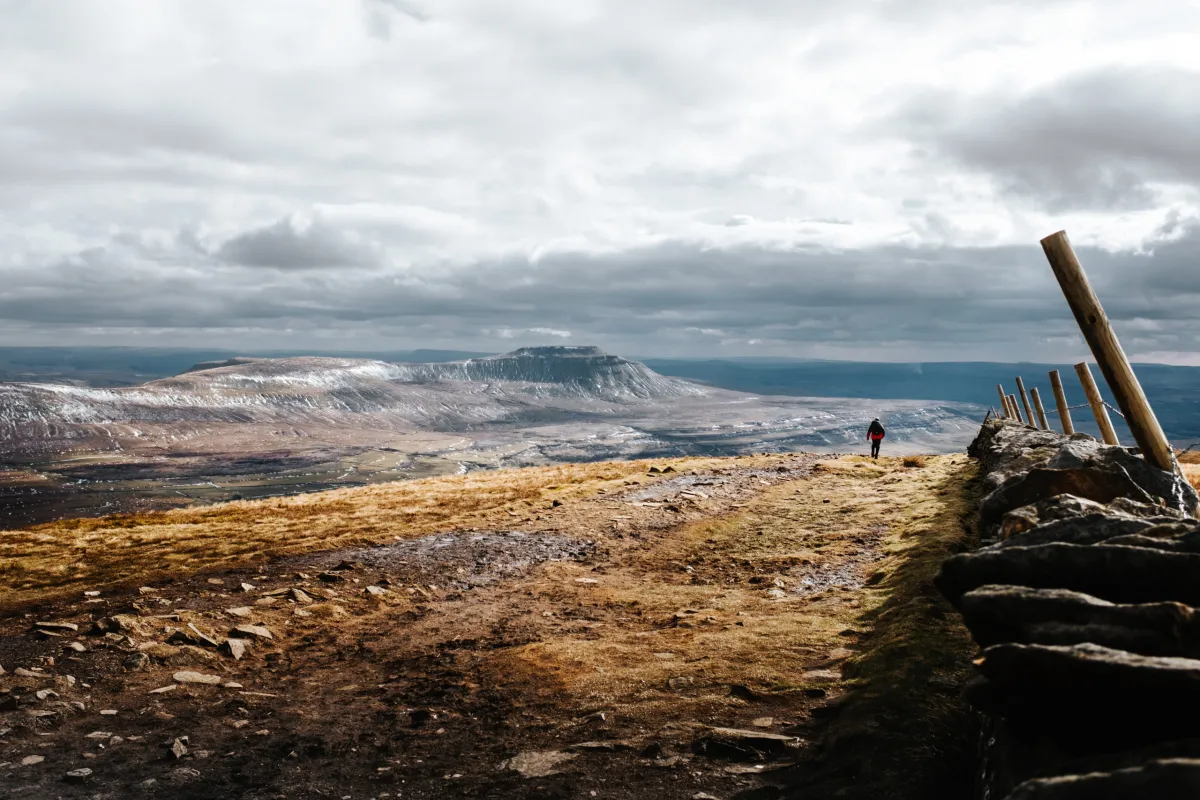 Photo: Yorkshire Dales, via i2.wp.com
This isn't romantic nonsense – it's practical magic. When your workspace looks out onto growing things, changing things, living things, it's impossible not to be reminded that creativity is a natural process, subject to seasons and cycles, patience and weather.
The Beautiful Chaos of Creative Independence
Step inside any garden studio and you'll find a particular kind of organised chaos that speaks to the luxury of having space that belongs entirely to you. Half-finished projects perch on windowsills, tools hang from every available hook, and works-in-progress claim surfaces with the confidence of squatters' rights.
"In the house, I was always tidying up, always apologising for the mess," explains weaver Sarah Mills, whose studio occupies a former stable block in rural Wales. "Out here, the mess is part of the process. I can leave a project half-finished and know it'll be exactly as I left it when I come back."
This freedom to leave things undone, to let projects evolve slowly, to follow creative tangents without having to explain or apologise, is perhaps the greatest gift of the garden studio. It's permission to be messy, experimental, gloriously impractical in the pursuit of something beautiful.
The Pilgrimage to the Studio
There's ritual in the daily journey from house to studio, even if it's only a few steps down the garden path. Makers describe it as a transition, a shifting of gears, a way of leaving domestic life behind and entering creative space.
"I make tea, put on my studio cardigan, and walk down the garden," says printmaker Jane Foster, whose studio is housed in what was once her grandfather's potting shed. "By the time I turn the key, I'm already a different person. The mother, the wife, the woman who worries about bills – she stays in the house. Out here, I'm just someone who makes beautiful things."
This physical separation creates psychological space in a way that kitchen table crafting never can. The studio becomes not just a workspace but a sanctuary, a place where the outside world's demands fade and the only voice that matters is the quiet one that says: make this, try that, see what happens if...
Dreams Made Manifest
For those still dreaming of their own creative retreat, the garden studios of Britain offer both inspiration and practical hope. They prove that you don't need vast spaces or enormous budgets to create something transformative – you just need imagination, determination, and perhaps a tolerance for spiders.
"Start with what you have," advises Alison, as the afternoon light slants through her studio windows, illuminating rows of pots waiting for their first firing. "A corner of a shed, a greenhouse that's seen better days, even a large cupboard. The space will grow with your dreams."
As evening falls across Britain's gardens, lights begin to twinkle in studios and sheds from Cornwall to the Cairngorms. Behind each glowing window, someone is pursuing their passion, following their craft, making something beautiful in a space that belongs entirely to them.
These humble outbuildings have become the unlikely cathedrals of Britain's creative renaissance – proof that sometimes the most extraordinary things happen in the most ordinary places, and that all you really need to change your life is four walls, a roof, and the courage to claim your corner of the world.