The Art of Noticing What's Always Been There
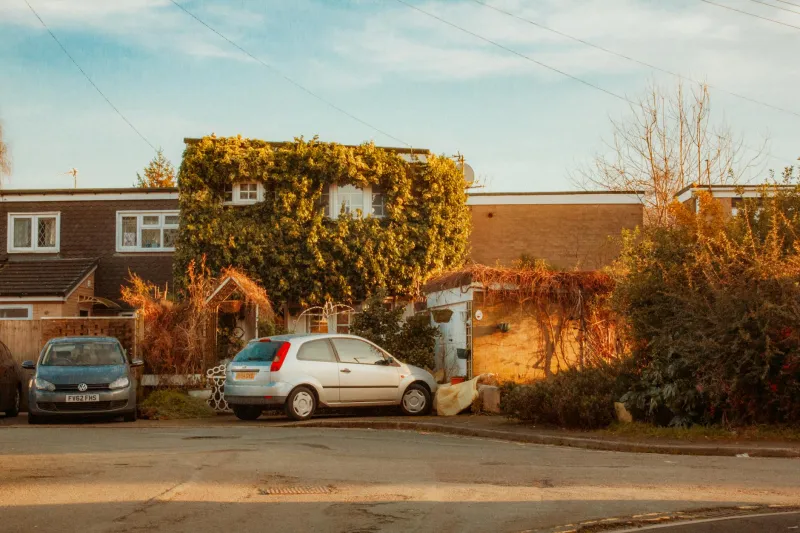
Sarah Jenkins pauses outside her terraced house in Hebden Bridge every morning, not to check the weather, but to really see the way frost settles into the grooves of her Victorian front gate. It's a ritual that's become as essential to her ceramic practice as mixing clay or firing kilns. "People think you need to travel to Marrakech or Mumbai for inspiration," she laughs, running her fingers along the peeling paint of her neighbour's garden fence. "But I've found more colours in this one street than most people discover in a lifetime."
Sarah is part of a quietly revolutionary movement amongst British makers – artisans who've discovered that the most extraordinary palettes and patterns aren't hiding in exotic locations or trend reports, but right outside their front doors. From the particular green of lichen growing on Cotswold stone to the way Manchester rain creates streaks down red brick, these makers have learned to read their landscapes like love letters.
Reading the Language of Place
In her small studio overlooking the Pennines, Sarah's latest collection tells the story of her street through porcelain. There's the soft grey-green of her neighbour's slate roof after rain, captured in a series of breakfast bowls. The warm ochre of autumn leaves pressed against wet pavement becomes the base glaze for her dinner plates. Even the particular shade of red from the postbox at the corner – that distinctly British scarlet that's somehow both cheerful and dependable – appears as accent details on her serving pieces.
"It took me years to realise that what felt ordinary to me was actually deeply specific," she explains, holding up a mug glazed in the exact colour of the sandstone wall that runs behind her garden. "Tourists come here and photograph that wall constantly. They see something I'd been walking past for twenty years without really noticing."
This shift from overlooking to truly observing has become the foundation of Sarah's practice. Her morning walks now involve stopping to photograph shadows, collecting fallen leaves for their exact shade, and noting how light changes the appearance of familiar surfaces throughout the seasons.
From Cornish Shores to City Streets
Down in Cornwall, textile artist Maya Patel has built her entire brand around the specific palette of her adopted hometown of St. Ives. But it's not the obvious blues and whites of sea and sand that capture her imagination – it's the subtler notes that locals know by heart.
"Everyone expects coastal colours to be fresh and bright," Maya explains from her workshop, where bolts of hand-dyed fabric hang like prayer flags. "But the real magic is in the in-between colours. The grey-brown of wet sand with seaweed tangled through it. The particular green of sea glass that's been tumbling in these waters for decades. The way rust blooms on the harbour railings where salt spray meets iron."
Maya's scarves and wall hangings capture these nuanced tones through natural dyeing processes, using plants foraged from the coastal paths she walks daily. Her 'Harbour Morning' collection recreates the exact palette of St. Ives at dawn – not the picture-postcard version, but the working harbour reality of fishing nets, weathered wood, and seagulls picking through yesterday's catch.
Meanwhile, in Manchester's Northern Quarter, jewellery maker Tom Chen finds his inspiration in the urban landscape that surrounds his workshop. His latest collection, 'City Veins', draws from the patterns created by tram lines cutting through Victorian streets, the particular patina of copper guttering on converted mills, and the way graffiti weathers on brick walls.
"There's this assumption that cities can't be beautiful source material," Tom says, sketching the shadow patterns cast by the fire escape outside his window. "But industrial landscapes have their own poetry. The way old and new architecture creates unexpected colour combinations, how weather interacts with different surfaces, the accidental beauty of things like rust stains and moss growing in pavement cracks."
The Democracy of Local Inspiration
What's particularly striking about this movement is how democratic it feels. Unlike inspiration drawn from expensive travels or exclusive experiences, the material these makers work with is freely available to anyone willing to slow down and pay attention.
Jen Morris, who creates hand-printed wallpapers from her studio in Bath, puts it perfectly: "The Georgian architecture here isn't just backdrop – it's my teacher. Every morning I notice something new about the way shadows fall across those honey-coloured stones, or how the iron railings create patterns against the sky. My designs are love letters to this place, but they're also available to anyone who's learned to really see where they live."
Her wallpaper designs capture the geometric patterns of Georgian windows, the flowing curves of wrought iron, and the particular way Bath stone glows in afternoon light. But more than that, they represent a philosophy that beauty exists everywhere, waiting for someone to notice it properly.
The Slow Revolution of Deep Looking
This turn toward hyper-local inspiration represents something deeper than just aesthetic choice – it's a rejection of the idea that creativity requires constant novelty or exotic input. Instead, these makers are proving that depth comes from sustained attention, that the familiar can become extraordinary when viewed through eyes trained to really see.
"I used to think I needed to travel constantly to stay inspired," reflects Sarah, back in her Hebden Bridge studio. "Now I realise that I could spend a lifetime just understanding the colours and textures of this one street. Every season brings new combinations, every change in weather reveals something different. It's not about finding new things – it's about seeing familiar things with fresh eyes."
As these makers continue to mine their immediate surroundings for creative gold, they're quietly redefining what it means to be inspired. Their work suggests that the most authentic creativity might come not from seeking the exotic, but from falling deeply in love with where you already are.
In a world that often equates travel with sophistication and novelty with value, these British makers are proving that home itself can be the most inspiring destination of all.