The Language of Earth
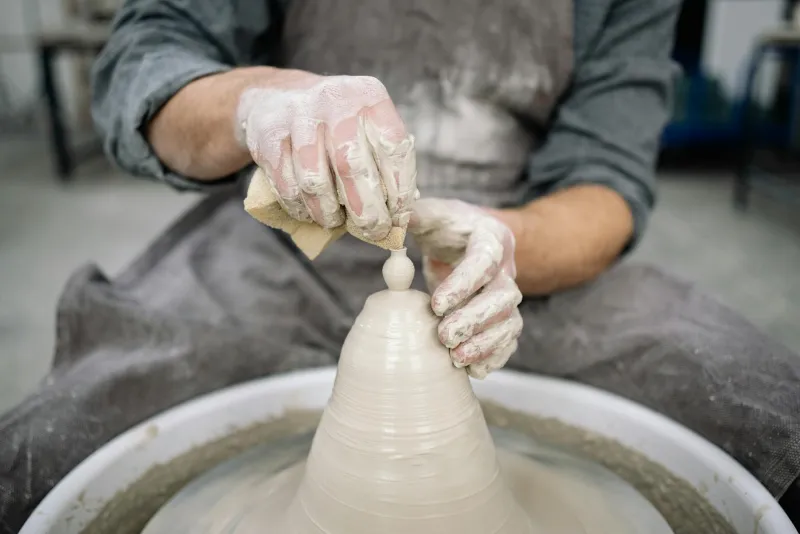
There's something profoundly moving about watching a potter's hands work clay on the wheel. In studios scattered across Britain, from converted barns in the Cotswolds to repurposed Victorian warehouses in Manchester, ceramicists are quietly creating magic—one vessel at a time.
"People often ask me why handmade pottery costs more than what they can buy in the shops," says Emma Richardson, whose studio overlooks the rolling hills of Derbyshire. "But when I hold a piece of clay, I'm not just making a bowl. I'm channelling the earth beneath my feet, the water from our local wells, and decades of learning into something that will outlive us all."
This is the heart of British ceramics—a tradition that stretches back millennia, yet feels utterly contemporary in our age of mass production and digital overwhelm.
From Vision to Clay
The journey begins long before the potter's wheel starts spinning. In sketchbooks worn soft from use, ideas take shape through pencil strokes and watercolour washes. Sarah Chen, whose London studio produces delicate porcelain pieces inspired by British wildflowers, keeps dozens of these books.
"I might sketch the same form fifty times before I understand what it wants to become," she explains, flipping through pages filled with flowing lines and colour studies. "The drawing isn't just planning—it's a conversation with the piece before it exists."
This preparatory dance between imagination and possibility sets handmade ceramics apart from their factory-produced cousins. Each sketch carries intention, each line holds meaning. When Sarah finally approaches her wheel, she's not just making another mug—she's bringing a vision to life.
The Alchemy of Regional Character
Perhaps nowhere is the connection between place and craft more evident than in British ceramics. The red earthenware of Staffordshire tells a different story than the pale clays of Cornwall, and makers across the country have learned to work with—rather than against—their local materials.
James Morton has spent fifteen years perfecting glazes using ash from trees on his Yorkshire farm. "Every season brings different colours," he says, showing me bowls that range from deep forest green to warm amber. "The ash from our apple trees creates this incredible creamy white, but only in autumn when the leaves have just the right mineral content."
This intimate knowledge of materials—how local clay behaves, which glazes complement the regional water chemistry, how altitude affects firing temperatures—creates ceramics that are unmistakably rooted in their place of origin.
The Kiln's Secret Wisdom
If the potter's wheel is where intention meets clay, the kiln is where magic happens. This is ceramics' most mysterious stage, where careful planning meets beautiful unpredictability.
"The kiln teaches you humility," laughs Rebecca Walsh, whose gas kiln has been firing pots in her Somerset studio for over two decades. "You can do everything perfectly—perfect clay preparation, perfect throwing, perfect glazing—and still open the kiln to surprises."
These surprises aren't flaws; they're the fingerprints of the handmade process. The slight variation in a glaze where the flame licked a pot differently. The subtle asymmetry that reveals human hands shaped this vessel. The unexpected colour where two glazes met and created something entirely new.
Stories That Live in Our Hands
What transforms a simple clay vessel into something precious isn't just the skill of its maker—it's the story it carries and the stories it will collect. Unlike mass-produced homeware, handmade ceramics age with grace, developing character through use.
"I love knowing that my mugs are part of people's morning rituals," says Tom Bradley, whose robust stoneware pieces have found homes across Britain. "Someone in Edinburgh starts their day holding something I made with my hands in Gloucestershire. That connection feels sacred."
This emotional resonance explains why handmade pottery has experienced such a renaissance. In our increasingly digital world, we crave objects that carry human warmth. A mug thrown on a wheel bears the subtle ridges of the potter's fingers. A bowl shaped by hand holds not just soup, but the maker's intention that it should nourish and comfort.
The Quiet Revolution
Across Britain, ceramicists are proving that slow, thoughtful making isn't just sustainable—it's essential. They're choosing quality over quantity, story over profit, connection over convenience.
Visit any British pottery studio, and you'll find makers who can tell you about every step of their process. They know where their clay comes from, how their glazes behave, why they choose wood firing over electric. This knowledge isn't just technical—it's deeply personal.
"When someone buys one of my pieces, they're not just getting a pot," reflects Emma Richardson as she pulls a batch of bowls from her kiln. "They're getting a piece of Derbyshire clay, fired with wood from our local forest, shaped by hands that have been learning this craft for twenty years. They're getting a story."
And perhaps that's what makes handmade British ceramics so special—they don't just hold our tea or display our flowers. They hold our stories, our connections to place and maker, our choice to value the human touch in an automated world.
In kitchens and dining rooms across Britain, these quiet ambassadors of craftsmanship remind us daily that the most beautiful things in life are still made with love, patience, and two hands working clay into something extraordinary.