The Sound of Silence
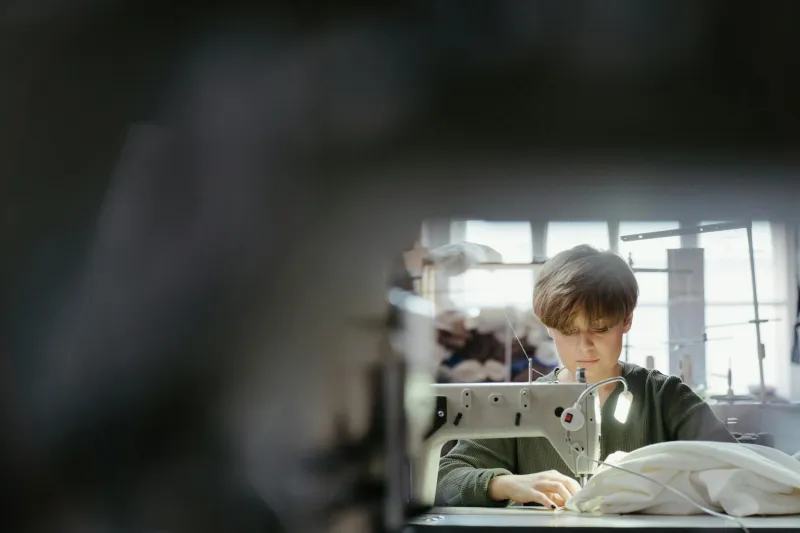
There's a particular hush that settles over Sarah Mitchell's converted barn studio in rural Gloucestershire when she begins hand-stitching a buttonhole. It's the same reverent quiet that once filled the legendary workshops of Savile Row, but here, amongst the rolling hills and morning mist, something different is happening. This is bespoke tailoring reimagined—not as an exclusive London privilege, but as a deeply personal craft finding its way back to Britain's heart.
"When I tell people I'm a tailor, they immediately picture Savile Row," Sarah laughs, adjusting the natural light streaming through her studio windows. "But some of the most exquisite work I've ever seen comes from makers working in spaces like this—where there's room to breathe, to think, and to really connect with each piece."
Sarah represents a growing movement of independent tailors who are challenging the geography of British bespoke. Armed with decades of training from heritage houses but freed from their constraints, these artisans are setting up shop in market towns, coastal villages, and converted spaces that would make their Mayfair counterparts envious.
The Measuring Ceremony
What strikes you first about this new wave of bespoke isn't just where it's happening, but how it's happening. Take James Hartwell, who operates from a beautifully restored Victorian mill in Hebden Bridge. His measuring appointments aren't hurried affairs squeezed between business meetings—they're genuine ceremonies of craft.
"I serve proper Yorkshire tea, we talk about the client's life, their work, what they need this garment to do for them," James explains, running his hands along a bolt of Harris Tweed. "By the time we start measuring, I understand not just their body, but their story. That's when the real tailoring begins."
This intimate approach is attracting clients who might never have considered bespoke before. Teachers saving up for one perfect blazer, artists wanting a jacket that moves with their creative process, retirees investing in a coat that will see them through decades of countryside walks. The demographics are shifting as dramatically as the locations.
The Language of Thread
In Lucy Chen's bright studio above a vintage shop in Margate, every stitch tells a story. A former Savile Row apprentice who traded London's pressures for seaside serenity, Lucy has discovered that her clients crave something different from traditional bespoke.
"They want to understand the process," she says, threading a needle with silk that catches the coastal light. "I show them how a sleeve is set, why certain seams are pressed in particular directions, what makes a buttonhole sing. It's not about mystery anymore—it's about sharing the magic."
This transparency extends to the making process itself. Where traditional bespoke often happened behind closed doors, these new artisans invite clients into their world. Progress photos are shared, fittings become collaborative conversations, and the final pressing ceremony is as celebrated as the first consultation.
The Economics of Forever
Perhaps most remarkably, this distributed approach to bespoke is making exceptional tailoring more accessible. Without central London overheads, these makers can offer prices that, while still significant, represent genuine value for money.
"I had clients spending £3,000 on a suit that would last three years," reflects Tom Bradley, who moved his tailoring practice from Canary Wharf to a converted chapel in the Peak District. "Now I make garments for £2,000 that will last thirty years. The maths isn't complicated—it's about choosing quality over quantity, story over status."
This philosophy resonates deeply with a generation increasingly wary of fast fashion's environmental and social costs. Each bespoke piece becomes a quiet act of rebellion against throwaway culture, a statement that some things are worth waiting for, worth investing in, worth treasuring.
The Apprentice Renaissance
What's particularly exciting about this movement is how it's attracting new talent. Traditional apprenticeships on Savile Row are notoriously difficult to secure, but these independent makers are creating alternative pathways into the craft.
Meg Thompson, who learned her trade through evening classes and now operates from a shared studio space in Bristol, represents this new generation. "I never would have made it through the traditional route," she admits. "But working with independent makers showed me that there are many ways to honour this craft while making it your own."
Her Instagram account, documenting everything from pattern drafting to final fittings, has inspired dozens of aspiring tailors across the country. The craft is spreading organically, person to person, stitch by stitch.
The Future in Every Fold
As I sit in Sarah's Gloucestershire studio, watching her complete that perfect buttonhole—each stitch precise yet somehow alive—it's clear that British bespoke tailoring isn't just surviving its evolution from Savile Row exclusivity. It's thriving.
These makers aren't rejecting tradition; they're expanding it. They're proving that exceptional craftsmanship doesn't need a prestigious postcode, that true luxury lies not in exclusivity but in the profound satisfaction of something made with absolute care, worn with pride, and treasured for a lifetime.
In workshops scattered across Britain, from Scottish highlands to Cornish coves, the quiet revolution continues. One perfectly crafted buttonhole at a time, these artisans are stitching together a future where bespoke belongs not to the few, but to anyone who understands that some things—the most important things—are always worth the wait.