The Island That Holds Everything
On the Isle of Harris, where Atlantic storms sculpt the landscape and light changes by the minute, weaver Morag MacLeod has never needed to look beyond her doorstep for inspiration. For thirty years, every thread in her loom has told the story of this single, extraordinary place—from the silver-grey of winter seas to the impossible turquoise of summer shallows, from the deep purple of heather-covered hills to the warm gold of machair grass dancing in coastal winds.
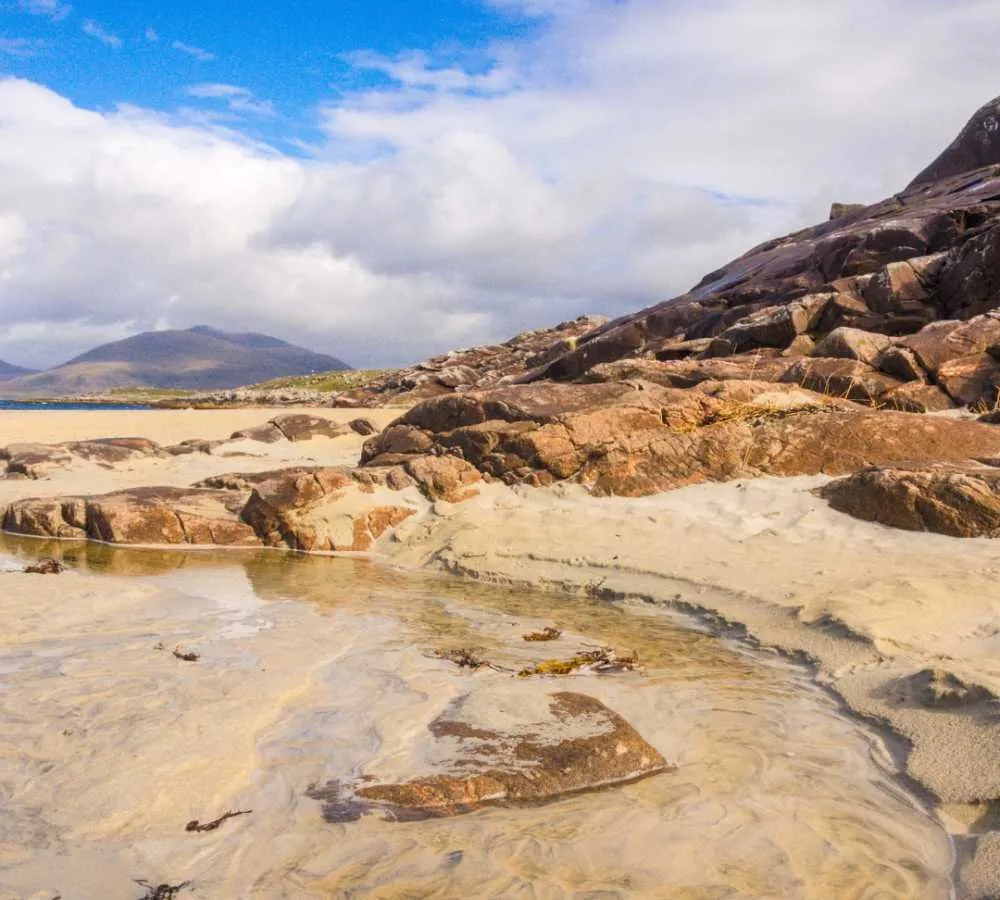 Photo: Isle of Harris, via images.squarespace-cdn.com
"People ask if I ever get bored, working from the same landscape," Morag says, her hands moving automatically through warp threads that mirror the colours outside her studio window. "But this place isn't the same from one day to the next. Every morning brings different light, different weather, different possibilities."
Morag represents a growing movement of British makers who've discovered something profound: that true creative depth comes not from casting a wide net across the world, but from diving deep into one beloved place until you understand its every mood, season, and secret.
The Philosophy of Place
In a converted barn on the edge of Dartmoor, potter Ben Hartwell shapes clay that was literally dug from the field behind his workshop. His glazes come from ash of gorse burned on the moor, from iron-rich earth that stains the local streams rust-red, from the crushed granite that gives this landscape its distinctive character.
"Every pot I make is Dartmoor," Ben explains, running his thumb along the rim of a bowl that gleams with the subtle colours of morning mist over granite tors. "Not just inspired by this place, but actually made from it. When someone drinks tea from one of my mugs, they're tasting the essence of where I live."
This isn't mere romanticism—it's a deliberate creative philosophy that's producing some of Britain's most distinctive contemporary craft. By limiting their geographical scope, these makers have found unlimited creative depth.
The Cornish Colour Hunter
On the Penwith peninsula, where Cornwall tapers to its dramatic conclusion, textile dyer Jess Treloar has spent fifteen years learning to read the landscape like a colour chart. She knows that the lichen on granite walls will give her soft yellows and oranges, that the rust from old mine workings creates the most extraordinary burnt siennas, that certain seaweeds gathered at specific tides will yield colours that exist nowhere else on earth.
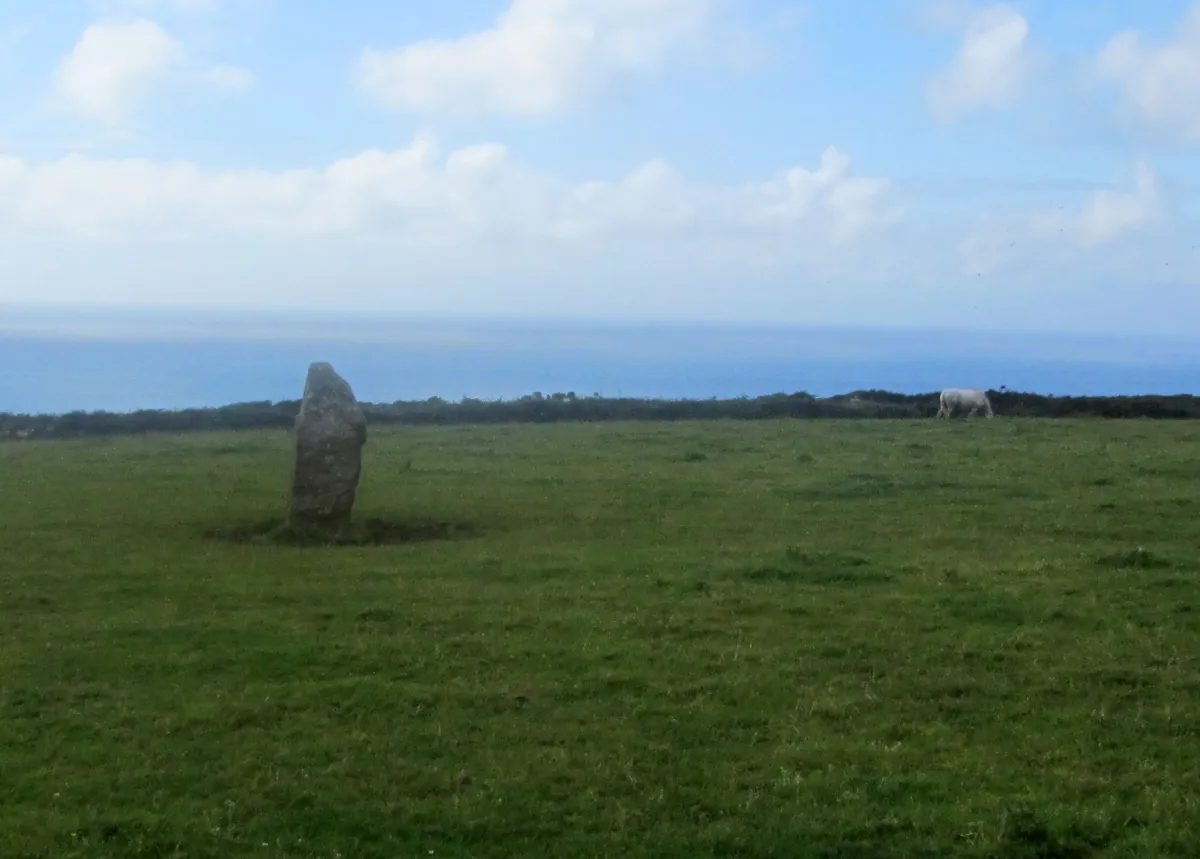 Photo: Penwith peninsula, via cdn.rowleygallery.co.uk
"I could travel to India for turmeric or to South America for cochineal," Jess reflects, stirring a dye bath that's the exact shade of sunset over the Atlantic. "But why would I, when this peninsula gives me colours that are unique to this place? My customers aren't just buying a scarf—they're buying a piece of Cornwall that exists nowhere else."
Jess's workshop calendar follows natural rhythms rather than fashion seasons. Spring brings fresh growth for green dyes, summer offers the richest plant materials, autumn provides berries and bark, winter is for processing and planning. It's a way of working that connects her to generations of dyers who understood that the best colours come from patient observation of place.
The Suffolk Storyteller
In the gentle rolling landscape of Suffolk, woodworker Tom Aldridge has found his entire creative universe within a five-mile radius of his workshop. Every piece of timber he uses comes from trees he's known personally—often for years before they needed to be felled. He can tell you stories about the ash that grew beside the village pond, the oak that sheltered sheep for a century, the cherry that bloomed spectacularly every spring outside the primary school.
"When I'm working a piece of local wood, I'm not just crafting furniture," Tom explains, his plane creating perfect curls from a plank of elm that once graced the village green. "I'm continuing that tree's story. The family who buys this table will be connected to this place in ways they might not even realise."
Tom's approach extends beyond materials to design itself. His pieces reflect the proportions and rhythms of Suffolk architecture, the gentle curves of the landscape, the weathered textures of ancient buildings. A Tom Aldridge chair doesn't just sit in a room—it brings the essence of Suffolk countryside indoors.
The Business of Being Rooted
Far from limiting their commercial potential, this hyper-local approach has given these makers distinct advantages in an increasingly globalised market. Their work carries authenticity that can't be manufactured or copied—it's literally rooted in place.
"My customers come to me because they want something that couldn't be made anywhere else," notes Jess from her Cornish dye workshop. "In a world of mass production, that's incredibly valuable. They're not just buying craft—they're buying connection to a specific place."
This authenticity translates into powerful storytelling. Every piece comes with a narrative that connects maker, material, and place in ways that resonate deeply with customers seeking meaning in their purchases.
The Seasonal Rhythm
Working from one place also means working with its natural rhythms. Ben on Dartmoor adjusts his firing schedule to weather patterns—certain atmospheric conditions create unique effects in his kilns. Morag times her weaving projects to the island's dramatic seasonal light changes. Tom plans his timber seasoning around Suffolk's particular climate patterns.
"I'm not fighting against my environment—I'm collaborating with it," Ben explains, checking the wind direction before loading his kiln. "Some of my best pieces happen because I understand how this place behaves in different seasons."
The Deepest Inspiration
What emerges from conversations with these place-based makers is a profound understanding that limitation breeds creativity rather than constraining it. By committing fully to one landscape, they've discovered depths of inspiration that would be impossible to achieve with a scattered approach.
"Every day I walk the same coastal path," Morag reflects, watching light play across the Harris hills. "But I've never walked it the same way twice. The colours change, the weather changes, my understanding deepens. Thirty years on, I'm still discovering new possibilities."
This intimate knowledge creates work that pulses with authenticity. These aren't makers drawing superficial inspiration from pretty landscapes—they're artists whose entire practice has been shaped by deep, sustained engagement with place.
The Ultimate Luxury
In our hyper-connected world, perhaps the ultimate luxury isn't access to global inspiration—it's the freedom to go deep rather than wide, to know one place so intimately that it becomes an inexhaustible source of creativity.
"People think I'm limiting myself by staying put," Tom chuckles, running his hand along a table made from wood that grew within sight of his workshop. "But I've found my universe right here. Why would I need to look anywhere else?"
These makers prove that the most profound creativity often comes not from traveling the world, but from learning to see the extraordinary in what's right outside our doors. In their hands, a single place becomes not a limitation, but an infinite source of wonder.