When Silence Becomes the Perfect Studio Companion
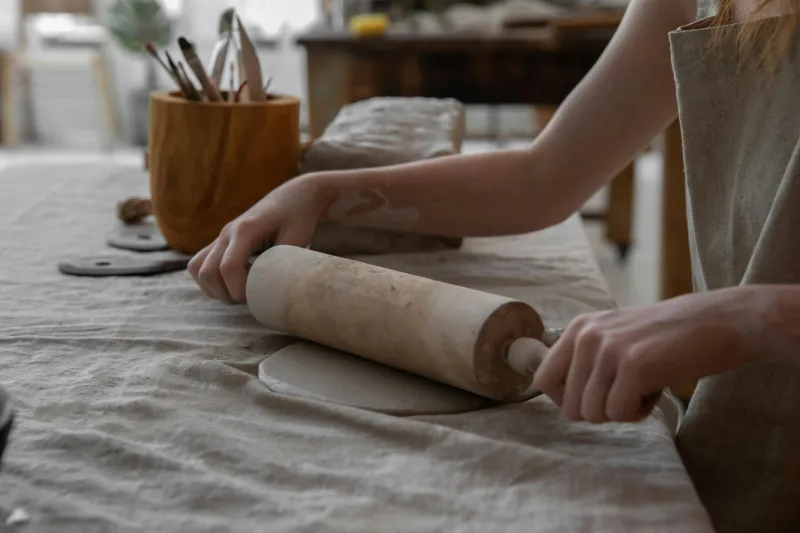
There's something almost sacred about the quality of light that filters through British windows at half past six on a Sunday morning. It's soft, unhurried, and completely devoid of expectation. For Sarah Mitchell, a ceramic artist from the Cotswolds, this golden hour has become the most treasured part of her week.
"I started getting up early out of necessity," she explains, her hands still dusty with clay from her morning session. "With two young children and a part-time teaching job, it was the only time I could guarantee would be truly mine. But what began as a practical solution has become something much more profound."
Sarah is part of a growing community of British makers who've discovered that the hours before dawn offer something our always-connected world desperately needs: genuine quiet. Not the performative quiet of meditation apps or the forced silence of digital detox weekends, but the natural, undemanding hush of a world still sleeping.
The Art of Unhurried Creation
In her kitchen studio in Edinburgh, textile artist Emma Thompson describes the ritual that's transformed her relationship with both making and living. "I wake up at five-thirty, make a proper cup of tea, and settle into my chair with whatever piece I'm working on. There's no rush, no deadline pressure, no phone notifications. Just me, my needle, and the gradual lightening of the sky outside."
This isn't about productivity in the modern sense. These makers aren't trying to optimise their output or maximise their creative potential. Instead, they're rediscovering what creation felt like before it became content, before every stitch needed to be photographed and every finished piece required a social media strategy.
"The work I do in those early hours feels different," explains Tom Harrison, a woodworker from the Lake District who rises at dawn to carve spoons before his day job as an accountant. "It's more intuitive, more connected to something deeper than just making things. It's like having a conversation with myself that I can't have any other time."
The Digital Detox We Didn't Know We Needed
What's particularly striking about Britain's Sunday morning makers is how naturally they've stepped away from the digital noise that accompanies so much of contemporary creative life. Without conscious effort, they've found themselves in spaces where Instagram doesn't intrude, where the pressure to document and share simply doesn't exist.
"I don't even bring my phone into the studio during those morning hours," says pottery artist James Wright from Brighton. "It stays charging in the kitchen. Those few hours are like stepping into a different century, where making was just making, not performance."
This organic digital detox seems to be having profound effects on both the quality of their work and their overall wellbeing. Multiple makers describe feeling more grounded, more present, and paradoxically more connected to their communities despite—or perhaps because of—these hours of solitude.
The Ripple Effect of Slow Mornings
What's fascinating is how these quiet creative hours seem to influence the rest of these makers' lives. They report sleeping better, feeling less anxious about social media, and approaching their work with renewed passion even during their 'official' creative time.
"It's changed how I think about everything," reflects Hannah Davies, a knitter from Wales who's been rising early to work on a blanket for her first grandchild. "When you start your day creating something beautiful with your hands, it sets a different tone entirely. Even mundane tasks feel more purposeful somehow."
The sense of accomplishment that comes from creating something tangible before the world fully wakes up seems to provide a buffer against the day's inevitable stresses. Several makers describe feeling like they've already 'won' the day by the time others are reaching for their first coffee.
Building Community in Solitude
Perhaps most surprisingly, these solitary morning makers are finding unexpected ways to connect with each other. Online forums dedicated to "dawn crafting" are growing, where makers share not finished products but reflections on their morning experiences. Local craft groups are experimenting with "silent sessions" that replicate the contemplative quality of those early hours.
"There's something special about knowing that while I'm sitting here with my embroidery, someone in Cornwall is at their loom, someone in Scotland is shaping clay, all of us choosing creation over consumption," says textile artist Lucy Chen from Manchester. "We're not together, but we're connected by this shared commitment to making space for making."
The Future of Mindful Making
As more Britons discover the restorative power of pre-dawn creativity, it feels like a quiet rebellion against our culture's obsession with optimisation and output. These makers aren't trying to build empires or disrupt industries; they're simply reclaiming time for the fundamental human pleasure of creating something with their hands.
In a world that increasingly values speed over depth, efficiency over contemplation, Britain's Sunday morning makers are writing a different story. They're proving that sometimes the most radical thing you can do is wake up early, make yourself a cup of tea, and spend a few unhurried hours bringing something beautiful into the world.
Their message is simple but profound: in the quiet hours before the world wakes up, we remember who we are beneath all the noise.