The Quiet Rebellion Happening in Our Homes
Across Britain, a quiet revolution is unfolding in spare bedrooms, garden sheds, and kitchen nooks. It's not the kind that makes headlines or stops traffic—it's gentler than that, but no less transformative. It's the revolution of makers who've dared to turn their midnight musings into morning businesses, their weekend hobbies into weekday livelihoods.
We've all heard the fairy tales: the entrepreneur who started in their garage and built an empire. But the real stories—the ones that matter—are messier, more human, and infinitely more inspiring. They're about the ceramicist who spent three years perfecting glazes whilst working full-time at a call centre, or the textile artist who saved every penny from her teaching salary to buy her first proper loom.
The Moment Everything Changed
Sarah Chen knows that moment intimately. Three years ago, she was folding her handmade soaps into tissue paper at her dining table, wondering if anyone beyond her mum and sister would ever want to buy them. Today, her botanical skincare range graces the shelves of independent shops from Cornwall to the Highlands.
"The turning point wasn't when I got my first wholesale order," Sarah reflects from her converted garage studio in Bath. "It was when a customer wrote to say my rose and oatmeal soap helped her through chemotherapy. That's when I realised this wasn't just about pretty packaging—it was about connection, about caring for people I'd never meet."
This sentiment echoes through conversations with makers across the country. The moment when passion project becomes purpose-driven business isn't marked by profit margins or Instagram followers—it's marked by human connection.
The Beautiful Messiness of Beginning
Tom Bradley's journey began with a broken chair and a YouTube tutorial. Four years later, his bespoke furniture fills London flats and country homes alike. But between that first wobbly repair job and his current six-month waiting list lies a story of spectacular failures, financial anxiety, and the kind of determination that only comes from loving what you do.
"I ruined more wood than I care to admit," Tom laughs, running his hand along a perfectly smooth walnut table. "My partner banned me from using the kitchen as a workshop after I accidentally stained the floor with mahogany varnish. That's when I knew I needed proper space—not just for the work, but for the dream to grow."
The transition from hobby to business rarely follows a straight line. Most makers speak of pivotal moments disguised as ordinary Tuesday afternoons: the market stall that sold out in two hours, the Instagram post that went viral amongst craft lovers, the friend-of-a-friend who commissioned a wedding gift and sparked a whole new product line.
The Sacrifices Nobody Talks About
Behind every beautifully curated Instagram feed lies a less photogenic reality. The 5am starts before the day job. The weekends spent at markets instead of with friends. The Christmas money that went on materials instead of holidays.
Jess Murphy, whose hand-dyed yarns now supply knitters across Europe, remembers the lean years with startling clarity. "I lived on beans on toast for months to afford decent wool. My social life disappeared—whilst my friends were out for drinks, I was at home winding skeins and updating my Etsy shop. Some people thought I was mad."
But ask any of these makers if they'd do it differently, and the answer is always the same: absolutely not. Because somewhere between the financial uncertainty and the physical exhaustion, something magical happens. The work stops feeling like work. The late nights become sacred time. The spare room transforms from storage space to sanctuary.
Building Community, One Customer at a Time
What strikes you most about successful maker businesses isn't their products—though they're invariably beautiful—it's their communities. These aren't customers in the traditional sense; they're collaborators, cheerleaders, and co-conspirators in the belief that handmade matters.
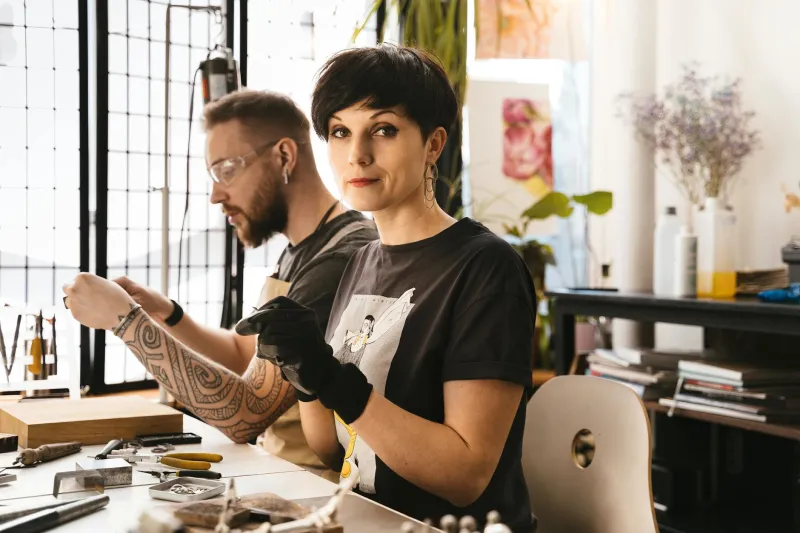
Lucy Williams discovered this when she started sharing behind-the-scenes glimpses of her jewellery making process. "I thought people just wanted to see the finished pieces," she explains from her Brighton workshop. "But they were fascinated by the process—the hammering, the soldering, even the mistakes. They wanted to be part of the journey."
This transparency has become Lucy's superpower. Her customers don't just buy earrings; they invest in stories. They know which pieces were inspired by seaside walks, which ones were born from happy accidents, and which ones took seventeen attempts to get right.
The Ripple Effect of Choosing Handmade
Every purchase from a small maker sends ripples through the creative economy. It's not just about supporting one person's dream—it's about supporting the local wool shop where they buy materials, the market where they first sold, the packaging supplier who shares their values.
"When someone chooses my pottery over mass-produced alternatives, they're voting for a different kind of world," explains ceramicist David Park. "A world where things are made with intention, where imperfections are celebrated, where the maker's hands leave invisible fingerprints on everything they touch."
The Dreams Taking Shape in Spare Rooms Right Now
Across Britain tonight, there are countless spare rooms humming with quiet ambition. Kitchen tables covered in fabric swatches and business plans. Garden sheds transformed into pottery studios. Bedrooms doubling as photography studios for handmade goods.
These spaces might look unremarkable to outsiders, but they're incubators for dreams that could reshape our relationship with the objects we surround ourselves with. They're proof that revolution doesn't always roar—sometimes it whispers, stitches, shapes, and slowly but surely changes everything.
The makers who've made this leap didn't start with perfect plans or unlimited funds. They started with love, added a generous helping of stubbornness, and trusted that somewhere out there, people were waiting for exactly what they had to offer. They were right.