There's something almost sacred about stepping into Sarah Mitchell's workshop in the Cotswolds. The air is thick with the perfume of cedar shavings and the ghost of linseed oil, whilst morning light filters through dusty windows onto workbenches scarred by decades of devoted craftsmanship. Here, in this converted stable block, timber that has weathered centuries finds its calling once again.
"People think I'm mad," Sarah laughs, running her palm along a beam of English oak that once supported a Tudor farmhouse. "But this wood has stories that MDF will never have. When I work with it, I'm not just making furniture – I'm continuing a conversation that started four hundred years ago."
The Poetry of Grain and Knot
Across Britain, a quiet renaissance is taking place in workshops tucked away in converted barns, garage spaces, and heritage buildings. These are the domains of our modern wood whisperers – craftspeople who understand that in our increasingly digital world, there's profound comfort in creating something tangible, something that will outlast its maker.
Take James Hartwell, whose workshop in rural Yorkshire specialises in what he calls "rescue woodwork." Every piece of timber that enters his space has a past life: church pews destined for the skip, Victorian floorboards lifted during renovations, or trees felled by last winter's storms.
"There's a meditation in understanding wood," James explains, his hands never still as he speaks, constantly feeling for the grain's direction. "Each piece tells you what it wants to become. My job isn't to force it into submission – it's to listen carefully enough to hear what it's saying."
This philosophy runs deep through Britain's growing community of independent woodworkers. Unlike mass production, where efficiency trumps character, these makers celebrate the quirks that make each piece unrepeatable. The knot that might be considered a flaw becomes a focal point. The slight warp from decades of weather becomes part of the piece's personality.
From Forest Floor to Forever Home
The journey from raw timber to finished piece is one that requires patience – a quality that seems increasingly rare in our instant-gratification culture. At Emma Chen's workshop in South London, reclaimed scaffolding boards undergo a transformation that can take months.
"First, they need to rest," Emma explains, gesturing to stacks of weathered planks. "Wood has memory. It remembers being a tree, remembers the building site, remembers the rain. Before I can work with it, it needs time to settle into its new life."
This respect for the material's journey resonates deeply with Emma's customers, many of whom seek her out specifically for bespoke dining tables and kitchen islands. "They don't just want furniture," she notes. "They want the story. They want to know their table was once part of something that helped build London's skyline."
The Sensory Symphony of Making
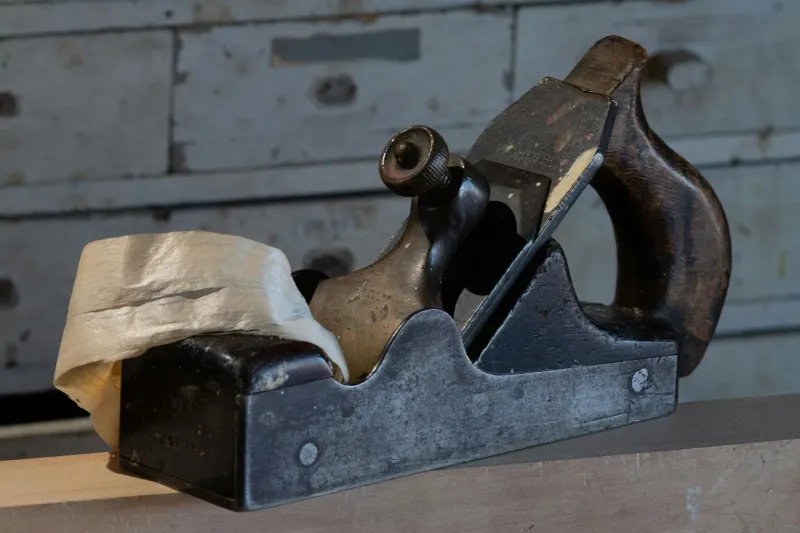
What draws people to these workshops isn't just the end product – it's the entire sensory experience of creation. The rhythmic whisper of a hand plane creating perfect curls of shaving. The satisfying thunk of a mortise and tenon joint clicking into place. The way different woods release their unique fragrances when worked – the vanilla sweetness of pine, the spicy warmth of walnut, the clean brightness of birch.
"There's something primal about working with wood," reflects David Kumar, who runs weekend workshops from his converted railway arch in Manchester. "In a world where most of our interactions are with screens, there's profound satisfaction in shaping something with your hands, in feeling the resistance of the material, in earning every smooth surface through patient effort."
David's workshops are booked months in advance, attracting everyone from stressed city workers seeking mindful escape to retirees discovering new passions. "They arrive tense and leave transformed," he observes. "There's magic in that transition from rough timber to finished piece. You can see it in their faces when they run their hands over something they've created."
Building Community, One Shaving at a Time
What's particularly beautiful about Britain's woodworking renaissance is how it's fostering genuine community. Instagram feeds filled with work-in-progress shots create virtual workshops where makers share techniques and celebrate each other's successes. Local markets become galleries where customers can meet the hands that shaped their future heirloom.
"The relationship doesn't end with the sale," notes Sarah from her Cotswolds workshop. "People send me photos of their pieces in their homes, updates on how the wood is aging, stories about dinner parties around tables I've made. I'm not just selling furniture – I'm creating connections."
In a world increasingly dominated by the disposable and the digital, these craftspeople are guardians of something precious: the understanding that objects made with care, skill, and intention carry weight beyond their physical form. They hold the maker's attention, the wood's history, and the promise of stories yet to be written around their surfaces.
Every hand-planed surface, every carefully fitted joint, every piece of British timber given new life whispers the same truth: some things are worth the wait, worth the investment, worth the love. In workshops across the country, ancient trees continue their journey, finding new purpose in the hands of those who understand that the very best things in life are still, and always will be, made by hand.