The Sacred Hour Between Chaos and Creation
It's 11:47 PM in a terraced house in Bath, and whilst the rest of the street sleeps, Sarah Chen is bent over her kitchen table, sketching patterns for silk scarves by the light of her phone torch. The dishwasher hums its familiar tune, there's a half-empty cup of tea growing cold beside her elbow, and somewhere upstairs, her seven-year-old has just stopped calling for another glass of water.
This is where Britain's most beloved handmade accessories begin—not in gleaming studios or inspiration-filled workshops, but in the quiet spaces between family life and personal dreams. The kitchen table, that most democratic of creative spaces, has become the unlikely birthplace of some of our most treasured handcrafted pieces.
"People imagine I have this beautiful atelier somewhere," laughs Sarah, whose hand-painted silk scarves now grace the necks of customers from Edinburgh to Brighton. "The reality is my design studio is wherever I can clear enough space between the fruit bowl and my daughter's homework."
The Beautiful Mess of Making
There's something deeply moving about the unglamorous truth behind handmade beauty. Whilst Instagram feeds showcase perfectly arranged flat-lays and pristine workbenches, the real story unfolds in spaces where creativity must negotiate with daily life—where sketches share table space with tomorrow's packed lunches, and where inspiration strikes between loading the washing machine and checking homework.
Emma Williams from Cardiff discovered this firsthand when she began crafting her now-famous ceramic jewellery collection. "I started making pieces on the kitchen table after everyone had gone to bed," she recalls. "I'd spread out newspaper, set up my little pottery wheel—one of those tiny ones you can pack away—and work until my eyes couldn't focus anymore."
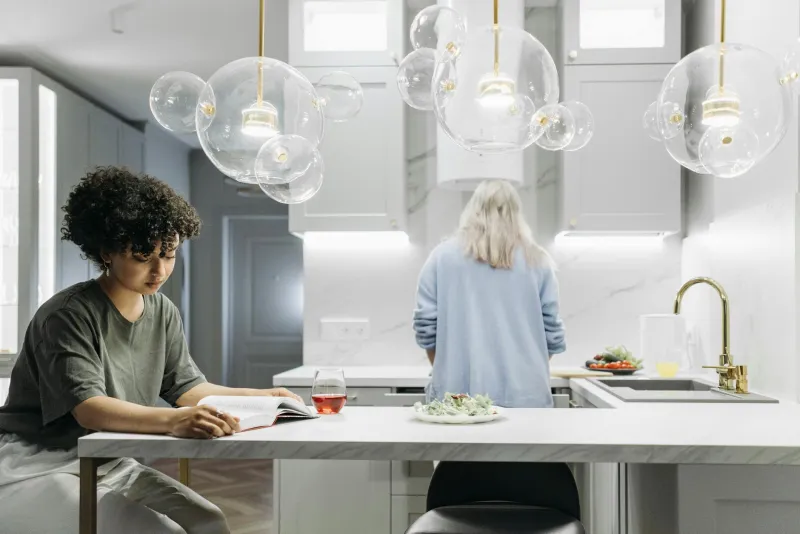
The kitchen table becomes a shape-shifter in these homes: breakfast bar by morning, homework station by afternoon, and creative sanctuary by night. It's a piece of furniture that holds the full spectrum of domestic life, making it perhaps the perfect metaphor for how creativity weaves itself through the fabric of real living.
When Midnight Strikes Gold
Some of Britain's most successful makers trace their breakthrough moments to these late-night kitchen table sessions. Rebecca Foster, whose beaded jewellery now sells in boutiques across the Cotswolds, remembers the exact moment her signature design came to life.
"It was about half past midnight, and I was fiddling with some vintage beads I'd bought at a car boot sale that morning," she explains. "The children were finally asleep, the house was quiet, and I just started playing. No pressure, no plan—just me, some beads, and this feeling that I had all the time in the world."
That feeling—the sense of stolen time and secret possibility—seems to be crucial to the kitchen table creative process. Without the pressure of a formal studio or the expectation of productivity, makers find themselves free to experiment, to fail, to discover.
The Democracy of the Domestic
What makes the kitchen table so special as a creative space isn't just its accessibility—it's its honesty. There's no pretence here, no carefully curated aesthetic. It's creativity in its most authentic form, surrounded by the detritus of daily life and infused with the energy of a space that's truly lived in.
"My best ideas come when I'm not trying," says Helen Murphy, whose knitted accessories have become a cult favourite among British fashion enthusiasts. "When I'm sat at the kitchen table with the radio on, half-listening to the late-night phone-ins, my hands just seem to know what to do."
This domestic approach to design has created a particularly British aesthetic—one that celebrates the imperfect, the personal, the slightly wonky charm that comes from creating in real spaces for real life. These aren't accessories born from trend forecasts or focus groups; they're pieces that emerge from the authentic experience of making something beautiful in the midst of ordinary chaos.
The Ripple Effect of Quiet Ambition
Perhaps most remarkably, these kitchen table beginnings often evolve into something much larger whilst maintaining their essential character. Sarah's silk scarves, Emma's ceramic pieces, Rebecca's beaded jewellery—they've all grown from midnight sketches to thriving businesses, but they retain the intimacy and authenticity of their humble origins.
"I've got a proper studio now," admits Sarah, "but I still do my best thinking at the kitchen table. There's something about that space—maybe it's the ghosts of all those late nights, or maybe it's just that it's where I feel most like myself."
The Magic in the Mundane
In a world increasingly obsessed with perfectly curated creative spaces and Instagram-worthy studios, there's something deeply refreshing about celebrating the kitchen table makers. They remind us that creativity doesn't require special conditions or expensive equipment—it just needs a willingness to find magic in the mundane, beauty in the everyday, and possibility in the quiet hours when the rest of the world sleeps.
Their stories are a testament to the fact that some of our most treasured possessions begin not with grand gestures, but with small moments of hope sketched between the washing up and bedtime. In celebrating these makers, we celebrate the beautiful truth that extraordinary things can emerge from the most ordinary places—and sometimes, that's exactly where they need to begin.